Death +++ Camp
ICE informs Congress—[corrected]:: and belatedly, the public::—of a third death at Camp East Montana

January 18, 2026
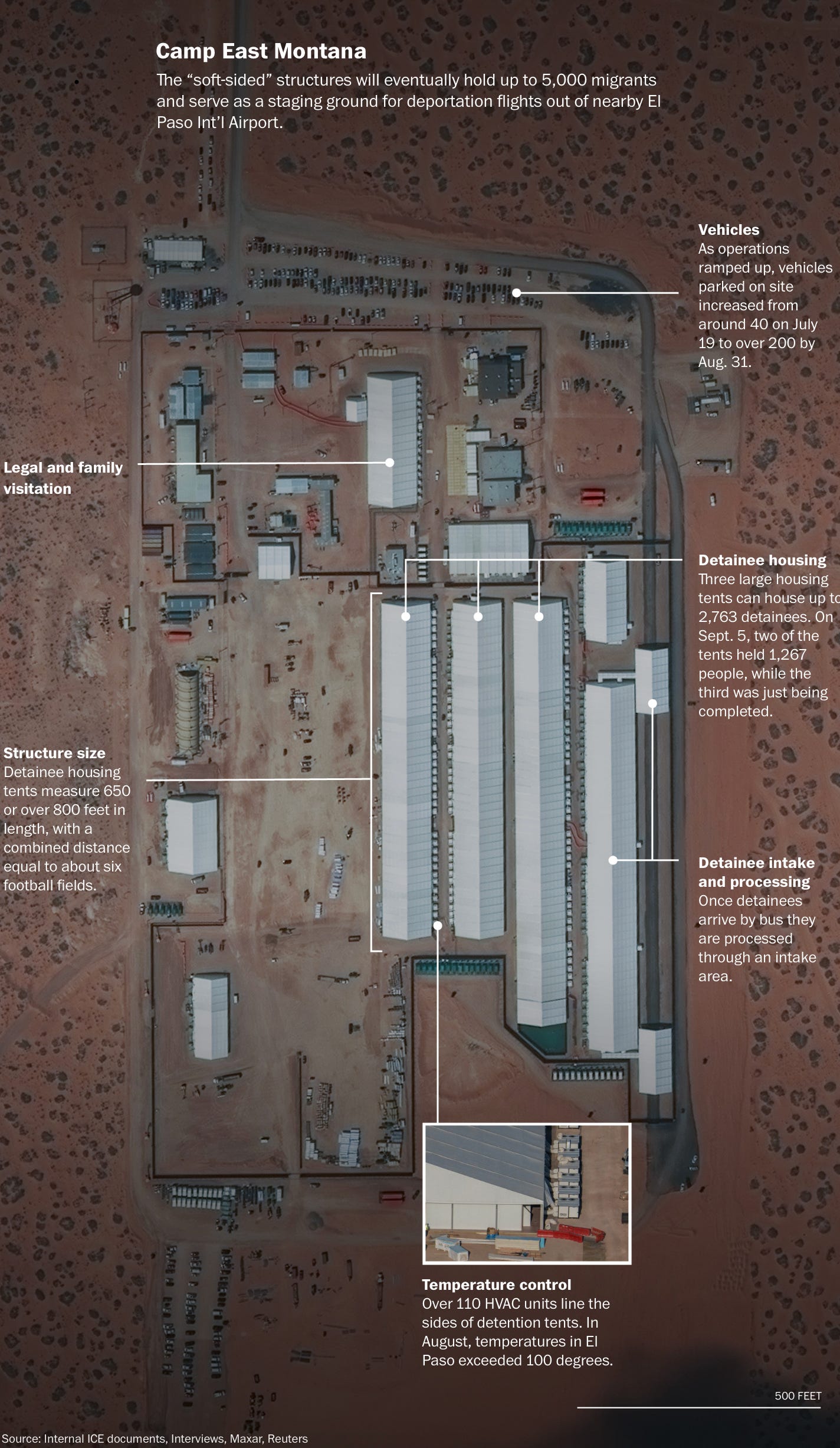
This morning ICE informed Congress that another migrant died at Camp East Montana. At 4:09 p.m. on January 14, 2026, 36 year-old Nicaraguan national Victor Manuel Diaz was pronounced dead in the Camp. At an unspecified time, Akima Global Services “[c]ontract security staff found Diaz unconscious and unresponsive in his [cell].” At 3:35 p.m., ICE claims, El Paso EMS got the call. They arrived 10 minutes later.
“He died of a presumed suicide.” - ICE Congressional Notification
ICE posted its press release this morning—ducking its 48-hour notification policy, which would have required the agency to post the notification on Friday—and once again burying the news in the weekend dump.
Suffice it to say, nothing they say can be believed, and everything they claim must be questioned.
WaPo reports they’re attempting to deport the witnesses to the homicide of Geraldo Lunas Campos.
This is standard operating procedure in ICE death cases, dating back to at least 2017. We documented it in the 2024 Deadly Failures report, and there are multiple instances of the agency spiriting away witnesses (cellmates, compas, paisanos) in the immediate aftermath of a person’s death in custody. I’m aware of two cases where ICE or its contractors threatened to put people in prison if they said anything about what they knew. In other investigations, contract security staff leered ominously into the cell windows at immigrants who are speaking to oversight professionals, reminding them who’s got control of their bodies once those interlopers leave the cage. In another case, CoreCivic shut down the phone system and wiped the scene clean before they called the Sheriff’s Department in to investigate a death.
It is certainly more likely, as a statistical matter, that the man died by suicide—the leading cause of deaths in most U.S. carceral facilities. But we cannot rely on probabilities where anomalies abound. Where the agency would seek to obscure who did the strangling of a man who choked to death. Where the business of deportation cannot halt to allow the business of a death investigation to be conducted. Where the overwhelming message from the owners of this business, i.e., the federal government, is that the lives and rights of people locked inside these places have no value and there is no mechanism by which anyone could ever impose accountability.
On Perception Management and Control
I just deleted a 1000-word screed on how bad things are, and how bad they’re about to get. It’s demobilizing and helps no one (except, perhaps, me).1 Instead, I want to offer some thoughts of hope and resilience.
I’ve been trying to document the ways the present regime is attempting to shape narratives and maintain legitimacy around events that would topple governments or plunge society into civil unrest in many places around the world (including this place as recently as 2020). They manage the communications about deaths in camps and shootings in streets precisely because they know they’re volatile occurrences that can easily lead to the facade of control crumbling. They know there’s only around 50k-60k of them and millions of us. They call in the national guard, the Bureau of Prisons riot control guards, and soon, the military counterinsurgent forces precisely for this reason. They lean on cities and states that push back and refuse to deploy their forces in support of a 60k-person ethnic cleansing squad precisely for this reason.
Through the lens of history all of these actions are signs of fragility and decay.
And they delay, mislead, and outright lie to us about these deaths not because it’s efficient or particularly dignified, but because it’s necessary. They buy up every social media algorithm, newspaper, news enterprise, and major media corporation because it’s necessary. They ignore or outlaw the exercise of constitutional rights because all of this is necessary.
The absence of the state’s boa constriction of social controls would spell the failure of its current political project, and the end of those attempting to advance it.
Nobody owns our imaginations. Nobody can control how and who we love. This terrifies them, so they respond with fear.
Which is why it’s so important to continue imagining, creating—ideally in communities—and loving each other.
Think about the people you’re close to. The children whose futures you care about. The elders and ancestors who brought you here. The beauty of creation all around us, unsullied by avarice and extraction. Act out of the love for these realities, and know that these actions, and this love, will ultimately defeat what we’re seeing, even if we aren’t promised a front-row seat to that defeat.
Like everyone in detention, none of us is promised a tomorrow. So we have to love today.
May the people dying in these spaces and those surviving the pain they inflict find peace, strength, and hope; and may some of you help to bring it to them.
January 18
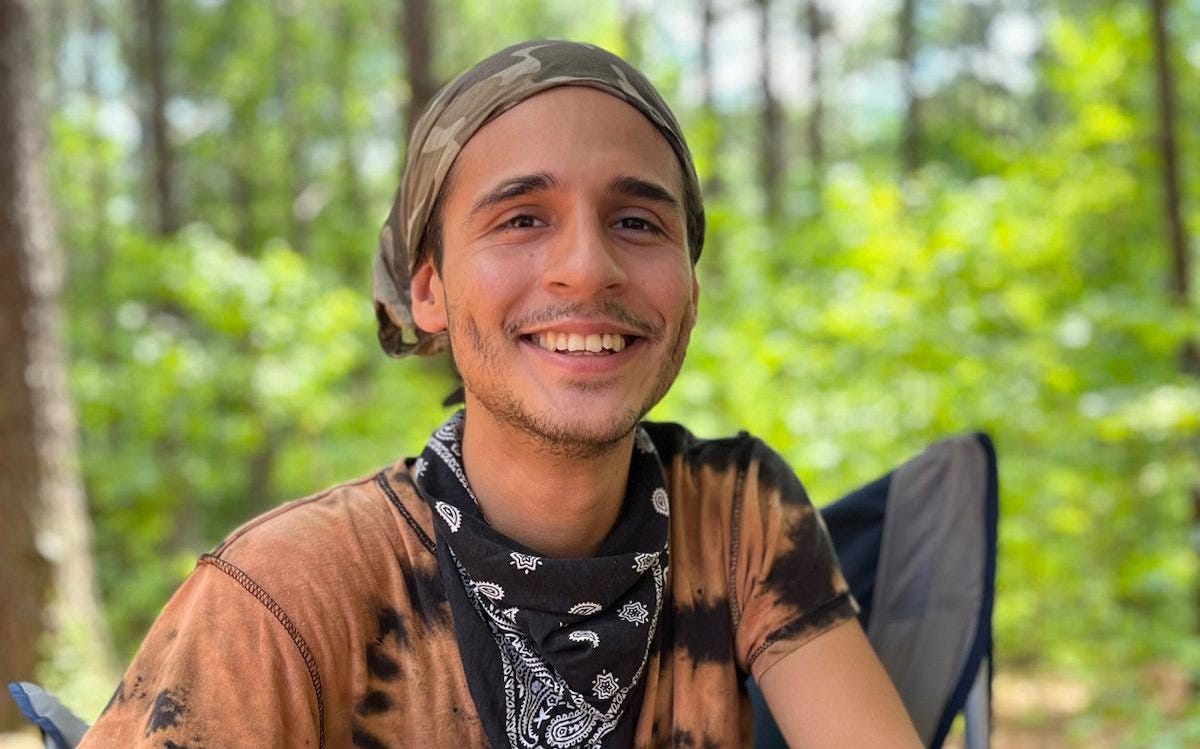
“The abolitionist mission isn’t done until every prison is empty,” Teran told me. “When there are no more cops, when the land has been given back, that’s when it’s over.” I must’ve shaken my head a little at the grandiosity of this statement because Teran immediately broke into a sheepish smile. “I don’t expect to live to see that day, necessarily. I mean, hope so. But I smoke.”
Rest in power, Tortuguita.
If you want to read it anyway, DM or email me and I’ll share.
I will call them death camps until someone else can say there are no more deaths there! They treat them like stray, unwanted dogs instead of human beings. If Victor Manuel Diaz did commit suicide, it was only because he couldn’t take the constant barrage of abuse. These private facilities are the biggest problem, no oversight by Congress, for profit, and overcrowding,
Here’s a video on YT of one private immigration detention center in Pennsylvania
https://youtu.be/-QiU43FI5Yw?si=hD1rB5SxYFVfzNjG
Where are the gas chambers and the crematoriums?